
Private Pilot Oral Exam Guide: A Comprehensive Plan
This guide comprehensively prepares student pilots for the FAA checkride, utilizing a question-and-answer format aligned with FAA standards.
PilotGuru.ai offers over 4,000 curated Q&A’s, categorized for thorough coverage, and includes an AI Mock Oral evaluation feature.
The oral exam assesses theoretical knowledge and practical decision-making, covering systems, planning, weather, regulations, and emergency procedures.
The Private Pilot Oral Exam represents a crucial component of the FAA practical exam, moving beyond simply demonstrating flight skills. It’s an in-depth conversation designed to evaluate your understanding of aviation principles and your ability to apply them to real-world scenarios. This isn’t a “gotcha” session, but rather an assessment of your aeronautical knowledge and sound judgment.
Expect questions spanning a wide range of topics, including aircraft systems, flight planning intricacies, weather interpretation, relevant regulations, and critical emergency procedures. The examiner aims to gauge your comprehension, not just rote memorization. Resources like PilotGuru.ai provide extensive question banks, categorized by complexity, to aid in preparation.
Successful completion hinges on clear, concise answers demonstrating a solid foundation in aviation fundamentals. Remember, the oral exam isn’t just about knowing the answers; it’s about showcasing your ability to think like a pilot.
II. FAA Regulations & Requirements
Understanding FAA regulations is paramount for any aspiring pilot, and a significant portion of the oral exam will focus on this area. Be prepared to discuss eligibility requirements for the Private Pilot License (PPL), including age, language proficiency, and medical certification. The examiner will assess your knowledge of the rules governing general aviation operations.
The certificate application process, specifically utilizing IACRA (Integrated Airman Certification and Rating Application), will likely be a topic. You should be familiar with the steps involved, required documentation, and the roles of both the applicant and the instructor.
Demonstrating a firm grasp of these regulations isn’t merely about passing the exam; it’s about ensuring safe and compliant flight operations throughout your piloting career.
A. Eligibility Requirements for the PPL
To qualify for a Private Pilot License (PPL), the FAA mandates specific criteria. You must be at least 17 years old, though you can begin training earlier. Proficiency in English is essential, enabling clear communication with air traffic control. A valid FAA medical certificate – either third-class for student pilots or higher – is non-negotiable.
Furthermore, you’ll need to demonstrate sufficient knowledge of aviation regulations and pass both a written knowledge test and a practical flight exam. Holding a student pilot certificate is a prerequisite to solo flight and further training.
Be prepared to articulate these requirements during the oral exam, showcasing your understanding of the foundational qualifications for becoming a pilot.
B. Certificate Application Process (IACRA)
The Integrated Airman Certification and Rating Application (IACRA) is the FAA’s online system for applying for pilot certificates and ratings. You’ll initiate the application process through IACRA, requiring a user account and accurate personal information.
Your Certified Flight Instructor (CFI) will also need an IACRA account to endorse your training and confirm your eligibility. The application includes sections for documenting flight time, endorsements, and knowledge test results.
Be prepared to discuss the IACRA process during the oral exam, demonstrating your understanding of how to legally apply for your PPL. Knowing the steps ensures a smooth and compliant certification journey.
III. Aircraft Systems – General Knowledge
A thorough understanding of aircraft systems is crucial for the oral exam. Expect questions covering the engine – fuel, oil, and ignition systems – and how they interact. Be prepared to explain the function of each component and potential failure modes.
Flight control systems, including ailerons, elevator, and rudder, will also be heavily scrutinized. You should articulate how each control surface affects the aircraft’s attitude and movement.
Demonstrate knowledge of system limitations and emergency procedures related to these systems. The examiner assesses your ability to safely operate the aircraft by understanding its core functionalities.

A. Engine Systems (Fuel, Oil, Ignition)
Engine system knowledge is paramount during the oral exam. Be prepared to detail the fuel system, from tanks to carburetor/fuel injection, explaining fuel grades and potential contamination issues. Understand how the fuel pump operates and what to do in case of failure.
The oil system’s function – lubrication, cooling – must be clearly articulated, alongside oil quantity checks and recognizing abnormal oil pressure/temperature.
Ignition systems, including magnetos and spark plugs, require detailed explanation. Know how to perform a magneto check and the implications of a faulty magneto. Expect questions on engine starting procedures and potential issues.
B. Flight Control Systems (Ailerons, Elevator, Rudder)
A thorough understanding of flight controls is crucial. Explain how ailerons control roll, the elevator controls pitch, and the rudder controls yaw. Detail the control surfaces’ movement and their effect on the aircraft’s attitude.
Be prepared to discuss trim systems – tabs on the ailerons, elevator, and rudder – and how they reduce control pressures. Explain the purpose of differential braking, if equipped, and its impact on ground control.
Understand control lock mechanisms and the importance of unlocking before flight. Discuss potential control system failures and appropriate responses. Know the impact of adverse yaw and how to counteract it with rudder input.
IV. Flight Planning & Preparation
Effective flight planning is paramount for safety. Be ready to discuss chart reading, sectional chart symbols, and navigation techniques. Explain how to determine true course, magnetic course, and true altitude. Demonstrate proficiency in using pilotage, dead reckoning, and radio navigation.
Weight and balance calculations are essential. Explain how to determine the aircraft’s weight and balance limits, and the impact of exceeding them. Discuss the use of weight and balance charts and performance data.
Know how to calculate fuel requirements, considering wind, distance, and fuel burn rates. Be prepared to discuss alternate airports and go/no-go decisions.

A. Chart Reading & Navigation (Sectionals, Charts)
Mastering sectional charts is crucial. Be prepared to identify airports, navigation aids, airspace boundaries, and terrain features. Explain the significance of chart symbols, including those for obstructions, airports, and navigational facilities.

Demonstrate your ability to determine distance using various methods, such as measuring with a plotter and using the latitude/longitude scale. Discuss how to calculate headings and courses, accounting for wind correction.
Understand the use of navigation logs and flight planning forms. Explain how to plot a course, determine estimated time en route, and calculate fuel consumption. Be ready to discuss pilotage, dead reckoning, and radio navigation techniques.
B. Weight and Balance Calculations
Understanding weight and balance is paramount for flight safety. Be prepared to define key terms like gross weight, empty weight, useful load, and center of gravity (CG). Explain how exceeding weight or CG limits affects aircraft performance and stability.

Demonstrate proficiency in calculating weight and balance using the aircraft’s weight and balance manual. Practice scenarios involving passengers, baggage, and fuel loads. Discuss the impact of different loading configurations on the CG.
Explain the importance of determining the aircraft’s current weight and balance before each flight. Be ready to discuss how to correct an out-of-limits condition and the consequences of operating outside the prescribed limits.
V. Weather Theory & Resources
A solid understanding of weather is crucial for safe flight operations. Be prepared to discuss the formation of various weather systems, including fronts, thunderstorms, and icing conditions. Explain how these systems impact flight and the associated hazards.
Demonstrate your ability to interpret weather reports, specifically METARs and TAFs. Practice decoding these reports to determine current and forecast weather conditions. Understand the significance of different weather symbols and abbreviations.
Discuss resources available for obtaining weather information, such as Aviation Weather Center (AWC) and Flight Service. Explain how to access and utilize these resources for pre-flight planning and in-flight decision-making.
A. Understanding Weather Reports (METAR, TAF)
Mastering METARs (Meteorological Terminal Aviation Routine Weather Report) is essential. Explain each element – station identifier, date/time, wind, visibility, cloud cover, temperature/dewpoint, altimeter setting, and remarks. Practice decoding examples quickly and accurately.
TAFs (Terminal Aerodrome Forecasts) predict future weather conditions. Understand the forecast period, wind, visibility, cloud cover, and potential changes. Differentiate between VFR and IFR conditions predicted in a TAF.
Be prepared to discuss how to interpret coded remarks within both METARs and TAFs, such as icing, turbulence, and thunderstorms. Explain how these reports influence go/no-go decisions for flight.
B. Recognizing Hazardous Weather Conditions (Thunderstorms, Icing)
Thunderstorms pose significant hazards. Detail the lifecycle of a thunderstorm – cumulus, mature, and dissipating stages – and associated dangers like turbulence, hail, lightning, and microbursts. Explain how to avoid thunderstorm activity, utilizing radar and pilot reports (PIREPs).
Icing is a critical concern. Describe the types of icing (rime, clear, mixed) and the conditions conducive to its formation. Explain how icing affects aircraft performance, specifically lift and drag. Discuss methods for preventing and mitigating icing, including de-icing and anti-icing procedures.
Be prepared to discuss other hazardous conditions like low-level wind shear and turbulence, and how to recognize and avoid them during preflight planning and in-flight.
VI. Aerodynamics & Principles of Flight
Understand the four forces of flight: lift, weight, thrust, and drag. Explain how each force acts on the aircraft and how they interact during various flight maneuvers. Detail the principles of Bernoulli’s theorem and Newton’s Third Law as they relate to lift generation.
Stall awareness is crucial. Define a stall and explain the factors that contribute to it, such as angle of attack and airspeed. Describe the symptoms of an approaching stall and the proper recovery techniques. Discuss the impact of load factor on stall speed.
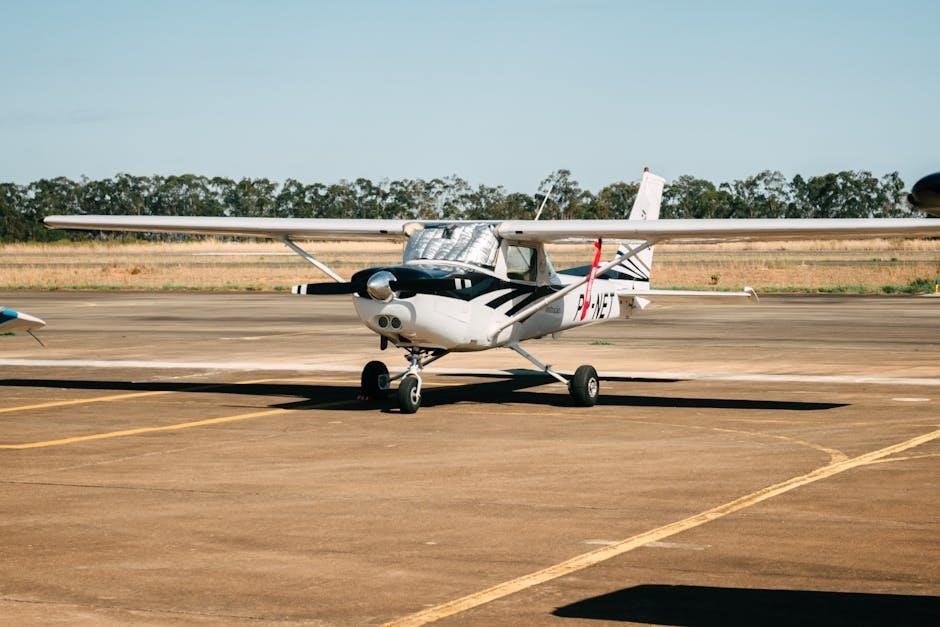
Be prepared to discuss wing design, airfoil characteristics, and how they influence aircraft performance and stability.
A. Lift, Drag, Thrust, and Weight
Lift is generated by the wings’ shape and angle of attack, opposing weight. Weight is the force of gravity acting on the aircraft. Thrust, produced by the engine, propels the aircraft forward, overcoming drag. Drag resists motion through the air, categorized as parasite and induced.
Explain how these forces are balanced in straight and level flight. Discuss how changes in these forces affect aircraft performance – climbs, descents, and turns. Understand the relationship between airspeed, angle of attack, and lift coefficient.
Be ready to define and differentiate between the types of drag and how they change with airspeed and aircraft configuration.
B. Stall Awareness & Recovery
A stall occurs when the critical angle of attack is exceeded, resulting in a loss of lift. Recognize stall warning signs: aural stall warning, mushy controls, and decreasing airspeed. Understand that stalls can occur at any airspeed or attitude.
Describe the proper stall recovery technique: decrease angle of attack, increase power, and coordinate rudder and aileron inputs. Explain the importance of avoiding abrupt control movements during recovery.
Be prepared to discuss factors affecting stall speed, such as weight, load factor, and configuration. Know the difference between a power-on and power-off stall, and their respective recovery procedures.
VII. Emergency Procedures
Emergency procedures are critical for pilot safety. Be prepared to discuss engine failure procedures both in-flight and immediately after takeoff, emphasizing the importance of maintaining aircraft control.
Detail forced landing procedures, including selecting a suitable landing site, preparing the aircraft, and executing a safe landing. Explain the use of checklists and emergency equipment.
Know procedures for other emergencies like electrical failures, fires, and loss of communication. Understand the importance of calmly assessing the situation, prioritizing actions, and communicating with ATC when possible.
Practice reciting these procedures from memory, demonstrating a clear understanding of the steps involved.
A. Engine Failure Procedures (In-Flight, After Takeoff)

Engine failure after takeoff requires immediate action: maintain best glide speed, identify a suitable landing area, and configure the aircraft for a forced landing. Prioritize flying the airplane!
In-flight engine failure demands a similar response – establish best glide, troubleshoot if time permits (fuel selector, mixture), and prepare for a forced landing. Communicate the emergency to ATC.
Be prepared to discuss the “ABC’s” of emergency procedures: Airspeed, Best field, Checklist. Know your aircraft’s emergency checklist thoroughly.
Understand the factors influencing glide distance and how to maximize it. Demonstrate a clear understanding of the procedures and decision-making process.

B. Forced Landing Procedures
Forced landing procedures begin with identifying a suitable landing site – considering wind, terrain, and obstacles. Maintain best glide speed and configure the aircraft accordingly (flaps, fuel selector).
Communicate your intentions to ATC, providing your position and the nature of the emergency. Execute the checklist for a forced landing, securing the aircraft as much as possible.
Discuss the importance of a stable approach and maintaining control throughout the landing. Be prepared to describe techniques for minimizing landing speed and impact.
Understand how to assess the landing area and adjust your approach to account for wind and obstacles. Demonstrate a calm and methodical approach to this critical procedure.
VIII; Airspace Classification & Operating Requirements
Understanding airspace is crucial for safe flight. Class A requires IFR flight and specific altitude requirements, while Class B surrounds major airports, demanding ATC clearance and transponder codes.
Class C airspace necessitates two-way radio communication, and Class D surrounds airports with an operating control tower. Class E encompasses most airspace not designated otherwise, with varying requirements.
Class G airspace has minimal requirements, but pilots must still adhere to VFR regulations. Be prepared to discuss VFR and IFR minimums for each class, along with required equipment.
Know the operating requirements for each airspace, including communication procedures, altitude restrictions, and visibility/cloud clearance minimums. Demonstrate a clear grasp of airspace boundaries.
A. Class A, B, C, D, E, and G Airspace
Class A airspace begins at 18,000 feet MSL and requires IFR flight plans and equipment. Class B surrounds major airports, demanding ATC clearance and a functioning transponder.
Class C airspace extends five nautical miles around airports with an operational control tower, requiring two-way radio communication. Class D airspace is typically a five-mile radius around airports with a tower.
Class E encompasses controlled airspace not classified as A, B, C, or D, extending upwards from either the surface or a designated altitude. Class G is uncontrolled airspace, with minimal requirements.
Be prepared to define each class, its altitude range, visibility/cloud clearance requirements, and equipment needed for operation. Understanding these distinctions is vital for safe navigation.
B. VFR and IFR Requirements
Visual Flight Rules (VFR) depend on the pilot maintaining visual separation from obstacles and other aircraft. Minimum visibility and cloud clearance requirements are crucial for safe VFR flight.
Instrument Flight Rules (IFR) rely on instruments and ATC guidance, allowing flight in reduced visibility conditions. An IFR flight plan, appropriate aircraft equipment, and an instrument rating are essential.
Know the minimum safe altitudes for each rule set, and understand when transitioning between VFR and IFR is permitted. Be prepared to discuss lost communication procedures under both sets of rules.
The examiner will assess your understanding of the privileges and limitations associated with each flight rule, ensuring you can operate safely in various conditions.
IX. Communication Procedures
Effective radio communication is vital for safety and maintaining situational awareness. You must demonstrate proficiency in standard phraseology, speaking clearly and concisely.
Expect questions regarding initial contact, position reports, requesting clearances, and emergency communication procedures. Practice common scenarios like requesting taxi instructions or reporting a lost communication.
Squawk codes are essential for ATC identification. Understand the purpose of different codes, including 7500 (hijacking), 7600 (radio failure), and 7700 (emergency).
Transponder usage, including Mode C and altitude reporting, will be assessed. Be prepared to explain how to properly set and utilize the transponder during flight.
A. Radio Communication Phraseology
Standard phraseology ensures clear and unambiguous communication with Air Traffic Control (ATC). Examiners will assess your ability to use correct terminology and a professional tone.
Common phrases include “Say again,” “Unable,” “Standby,” and “Roger.” Understand the appropriate use of each, avoiding slang or ambiguous language. Practice initiating communication, requesting information, and acknowledging instructions.
Position reporting is crucial, especially when operating in non-towered airspace. Know how to accurately report your position relative to landmarks or navigational aids.
Emergency declarations require specific phrasing, such as “Mayday, Mayday, Mayday,” followed by your callsign and the nature of the emergency.
B. Squawk Codes & Transponder Usage
Transponders are vital for ATC identification and traffic collision avoidance. Examiners will verify your understanding of various squawk codes and their corresponding meanings.
Code 1200 signifies VFR flight and indicates your general location. Code 7500 denotes a hijacking, while 7600 indicates radio failure – know the procedures for each.
ATC may assign a specific squawk code for flight following or to identify your aircraft within a specific airspace. Always comply with ATC instructions regarding transponder settings.

Understand the limitations of the transponder and its role in enhancing situational awareness. Be prepared to discuss how to troubleshoot common transponder malfunctions.